

The Ortelia Curator Value Proposition
This post talks briefly about the Ortelia Curator value proposition. The post covers:
- Who does Ortelia Curator offer the greatest value to?
- Where does Ortelia Curator add value?
Who does Ortelia Curator offer the greatest value to?
Ortelia Curator is agnostic when it comes to organisational size. Ortelia Curator is an exhibition design tool aimed at exhibition professionals. It is designed to improve the efficiency and outcomes of the exhibition design process, from design to final layout. The overriding factor influencing value is the number of physical exhibitions an organisation (or individual) holds annually. Organisations with the following exhibition frequency criteria will find value in Ortelia Curator:
- Organisations that host 3 or more exhibitions per year.
- Organisations that host 1 to 3 large exhibitions per year (multiple gallery spaces and multiple floors)
- Organisations that produce and host travelling exhibitions
- Organisations that collaborate with Artists and Exhibition stakeholders
Where does Ortelia Curator add value?
Here are just four reasons why Ortelia Curator can add value to your organisation.
- Intuitive and easy learning curve
- Rapid design turnaround
- Easy communication with CMS
- Improves Occupational Health and Safety by reducing artwork handling
Exhibition Design Made Intuitive – For many museum professionals, adopting new software can be a time-consuming hurdle, especially when it disrupts established workflows. Ortelia Curator was developed in close collaboration with curators and exhibition designers to address this challenge head-on.
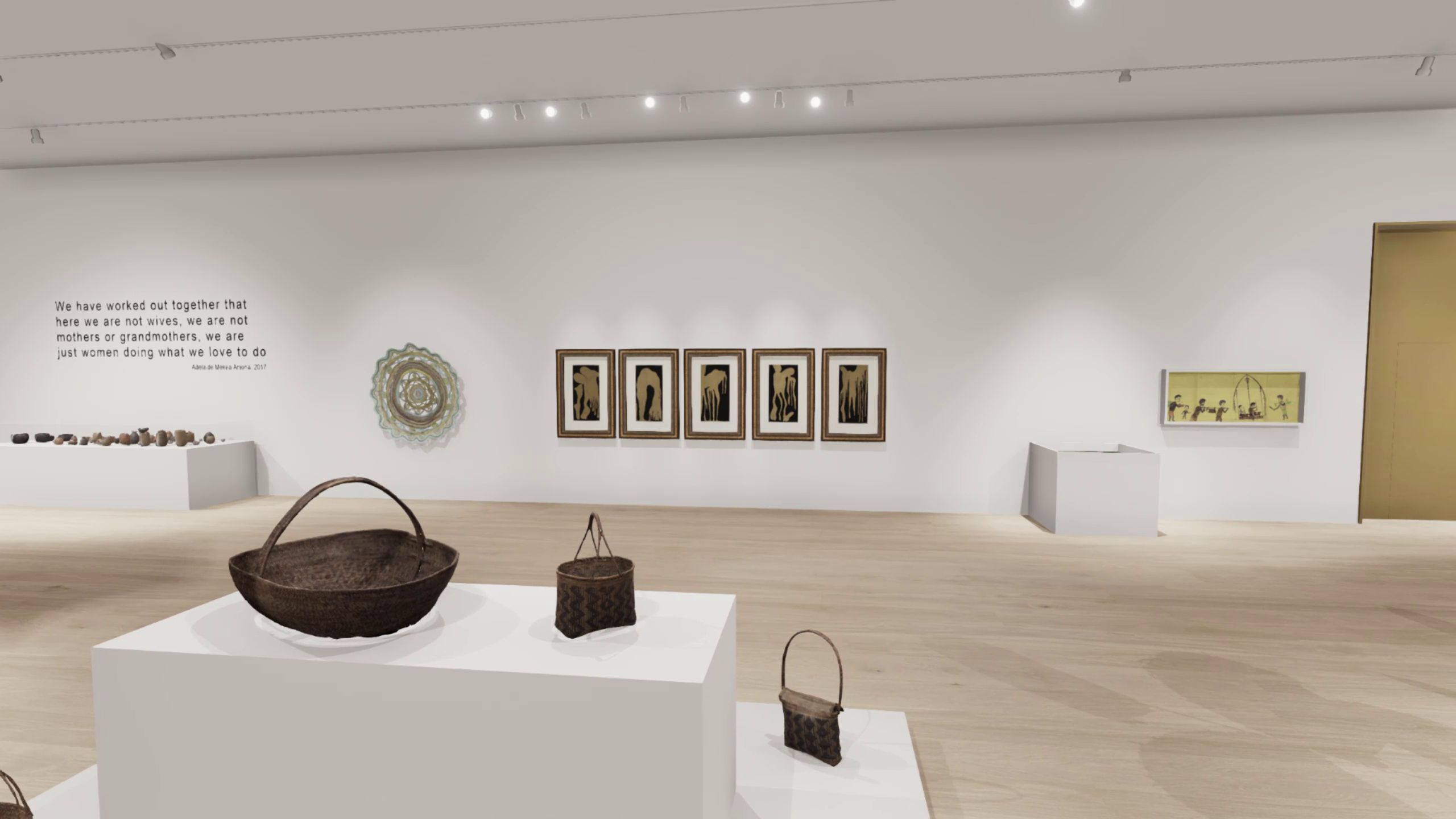
With its intuitive drag-and-drop interface, Ortelia Curator allows you to position and adjust artworks on any surface within a 3D gallery space quickly and confidently, without the need for extensive training.
The platform produces high-resolution renders and detailed design plans that integrate seamlessly into existing exhibition planning processes. These outputs not only support internal documentation but also streamline collaboration across teams.
Design files can be shared with embedded notes, making it easy to communicate curatorial intent, spatial decisions, and layout revisions. Whether you’re preparing for internal reviews or stakeholder presentations, Ortelia Curator helps you visualise, refine, and communicate exhibition concepts with clarity and speed.
Rapid design turnaround – Accelerate Exhibition Design with Real-Time Visualisation. Ortelia Curator empowers exhibition designers to test and refine ideas at speed. From artwork placement and wall colours to lighting schemes, multiple design concepts can be explored in minutes and not days.
Working within a true-to-scale 3D environment, designers can instantly identify and resolve spatial challenges such as sightlines, lighting effects, and contextual relationships between works.
The intuitive drag-and-drop lighting system enables precise, real-time adjustments, while wall surfaces can be easily recoloured to support curatorial intent.
Compared to traditional methods like physical scale models, Ortelia Curator can reduce design time by up to 90% over traditional processes, freeing up valuable resources and accelerating the path from concept to installation.
Easy communication with CMS – Ortelia Curator can easily interface with your Collections Management System to retrieve selected artworks directly for exhibition planning. This streamlined integration ensures that curators and designers can access and incorporate collection items without switching platforms or duplicating effort.
By bridging design and collections data, Ortelia Curator supports a more efficient, accurate, and responsive exhibition workflow.
Reduced artwork handling – Minimise Artwork Handling with Precision Planning.
Ortelia Curator generates detailed elevations and installation plans complete with artwork thumbnails, measurements, wall colours, and wall IDs at the click of a button. These comprehensive PDFs provide everything your team needs to execute an exhibition layout with confidence and minimal physical intervention.
By designing within a true-to-scale 3D environment, curators and installers can anticipate spatial challenges and reduce the need for on-site adjustments. The result: fewer handling risks, smoother installations, and greater alignment between the digital plan and the physical space.